-
Mark McNease’s Fearsome Fiction Special Edition: Short Story ‘Jawbone’ from 5 of a Kind
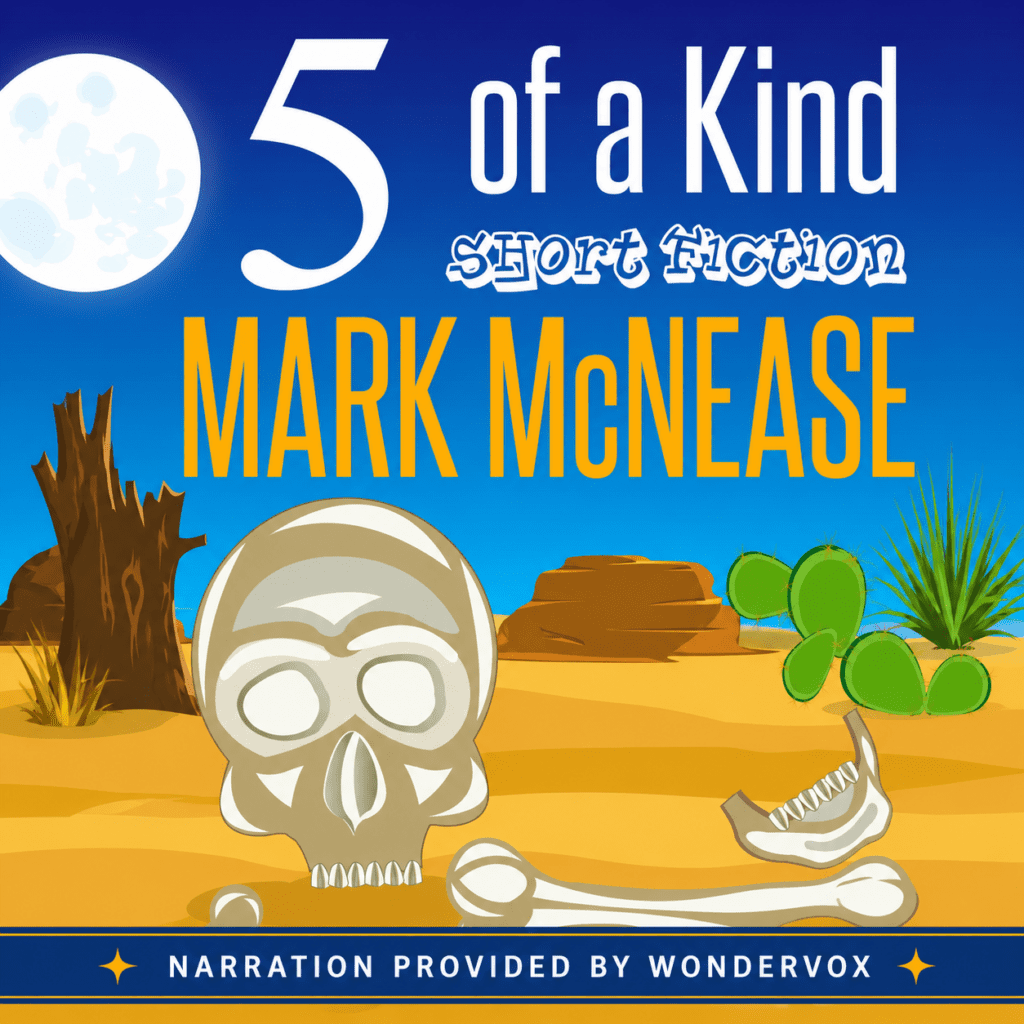
Today in this special feature of the Fearsome Fiction Podcast we’re offering another short story from Mark McNease’s collection, ‘Five of a Kind.’
Jawbone tells the story of young Richard who was eighteen years old when a head-on collision on a snowy Indiana road took the lower half of his face. He survived — and that, in many ways, was the cruelest part.
We Richard Krump across the decades after his accident: the surgeries that promised normalcy and delivered nothing, the friends who never showed up to his homecoming party, the little girl in a drugstore who gave him his name, and the slow, steady retreat of everyone he ever loved — until only his books, his silence, and finally his paintings remained.
A haunting, deeply human story about disfigurement, isolation, and the particular cruelty of surviving intact on the inside while the world refuses to see past the outside. Jawbone begins where a young man’s life as he knew it ends.
-
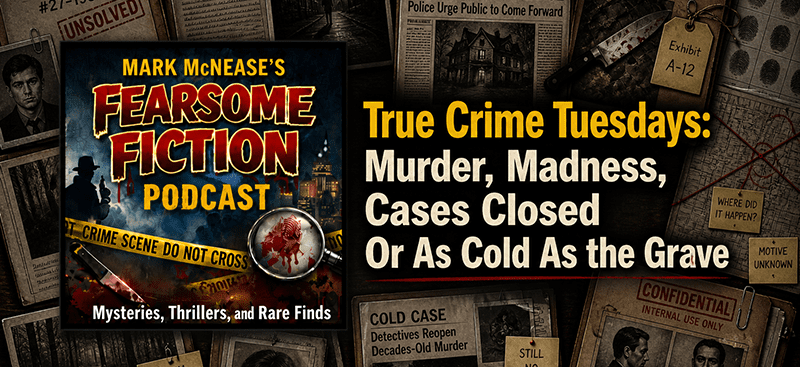
True Crime Tuesdays – A Fearsome Fiction Feature: Shot By a Killer Clown

True Crime Tuesdays — A Fearsome Fiction Feature: Shot by a Killer Clown
It was Memorial Day weekend, 1990, in Wellington, Florida. Marlene Warren answered her front door to find a clown holding flowers and balloons — and was shot in the face at point-blank range. The clown got back in the car and drove away. Marlene died two days later.
The case had a suspect almost immediately. It had circumstantial evidence. It had motive. What it didn’t have — for twenty-seven years — was enough to make an arrest. This week on True Crime Tuesdays, we follow one of the most bizarre cold cases in American history from a quiet Florida neighborhood in 1990 all the way to a courthouse in 2023, and a prison release that left a victim’s family without the justice they deserved.
Fearsome Fiction is produced by MadeMark Media. New episodes every Tuesday.
-
This Week’s Survey: What Spring Moment Do You Most Enjoy?
Which spring moment do you most enjoy?
The first farmers/outdoor market of the season
Putting the heavy coats and clothes away till next time
That one perfect spring morning when everything smells like possibility
Seeing everyone outside again after a long winter
Name your own in the comments -
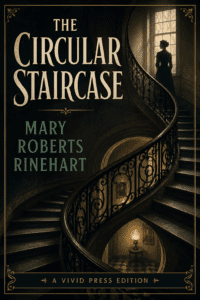
This Week’s Subscriber Giveaway: A Vivid Press Edition of Genre Classic ‘The Circular Staircase, by Mary Roberts Rinehard
The Circular Staircase by Mary Roberts Rinehard
A Vivid Press EditionSUBSRIBE AND DOWNLOAD YOUR FREE COPY
Welcome to another LGBTSr subscriber giveaway!
This is the story of how a middle-aged spinster lost her mind, deserted her domestic gods in the city, took a furnished house for the summer out of town, and found herself involved in one of those mysterious crimes that keep our newspapers and detective agencies happy and prosperous.
So begins one of the most entertaining and shrewdly constructed mysteries in American fiction.
Rachel Innes has no intention of playing detective. She simply wants a quiet summer at Sunnyside, a sprawling country house rented while its owners are away in California. But the first night brings strange sounds on the staircase. By the third, the servants have fled. And by the fourth, there is a dead man at the bottom of the circular staircase — a man her niece and nephew knew all too well.
What follows is murder, a vanished nephew, a bankrupt bank, hidden rooms, buried secrets, and a house that refuses to surrender its dead. Through it all, Rachel Innes — sharp-tongued, clear-eyed, and utterly unwilling to be frightened off her own lease — refuses to leave until she knows the truth.
First published in 1908, The Circular Staircase launched Mary Roberts Rinehart to national fame and sold over a million copies. It pioneered the “Had-I-But-Known” school of mystery writing, inspired the Broadway sensation The Bat, and gave Bob Kane one of the early sparks for Batman. At the peak of her popularity, Rinehart was more widely read than Agatha Christie.
She deserves to be read again.
A Vivid Press Annotated Edition of a Genre Classic vividpress.com
-
A Book Reading with Authors Mark McNease and Kim Cook, Lambertville, May 3 (Video Excerpt)
On May 3rd, 2026, in Lambertville, New Jersey, two authors came together for an afternoon of storytelling, craft, and memoir. Mark McNease shared excerpts from Blank Page to Bookshelf: From First Sentence to First Sale — his guide to fiction writing, character creation, and self-publishing — and Kim Cook shared from her powerful memoir, I Am My Father’s Child: A True Story of History, Mystery, Betrayal, and Forgiveness. Keep watching for a video excerpt from that event.
-
True Crime Tuesdays – A Fearsome Fiction Feature: The Black Dahlia
True Crime Tuesdays – A Fearsome Fiction Podcast Feature: The Black Dahlia
Welcome to True Crime Tuesdays. I’ll be sharing a true crime story every Tuesday on Mark McNease’s Fearsome Fiction Podcast. Narration is provided by my own Wondervox. Fasten your headphones for one of the most famous unsolved murders in the annals of American crime – or is it American madness?
They found her on the morning of January 15th, 1947.
A woman walking with her daughter through a vacant lot in the Leimert Park neighborhood of Los Angeles. She thought at first that what she was seeing was a discarded department store mannequin. A broken one, in two pieces.
It wasn’t a mannequin.
The body had been completely severed at the waist. Drained of blood. Cleaned. Posed with a precision that suggested not rage — but ritual. Her face had been slashed at the corners of the mouth, cutting what investigators would describe as a grotesque grin from ear to ear.
She was twenty-two years old. Her name was Elizabeth Short.
The press would call her the Black Dahlia — a name she never knew in life, but one that would outlast everything else about her.
-
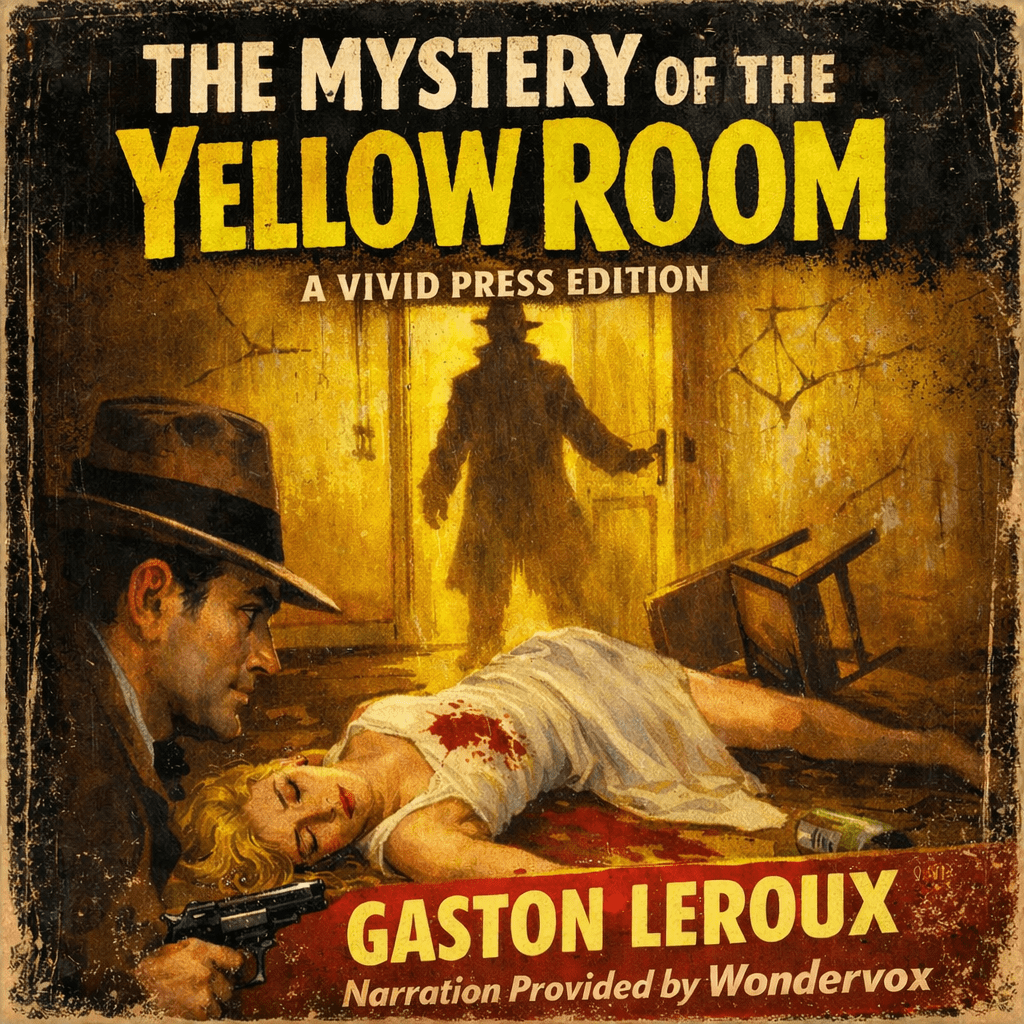
Mark McNease’s Fearsome Fiction Podcast: Genre Classic ‘The Mystery of the Yellow Room’ by Gaston Leroux (Chapters 11 – 13)
Welcome to Fearsome Fiction, the podcast that brings you mysteries, thrillers, rare gems, and a weekly True Crime Tuesday.
Today we continue our journey through one of the greatest locked-room mysteries ever written. Published in 1907, Gaston Leroux’s The Mystery of the Yellow Room set the standard for a genre that would captivate readers for generations. A young woman is found brutally attacked inside a room locked from the inside. No one could have entered. No one could have escaped. And yet someone did both. Following the investigation is the brilliant young journalist and amateur detective Joseph Rouletabille — one of fiction’s most ingenious and overlooked heroes — as he unravels a mystery that seems to defy every law of logic and nature. Now for your listening pleasure, another three chapters of Gaston Leroux’s ‘The Mystery of the Yellow Room.’
-
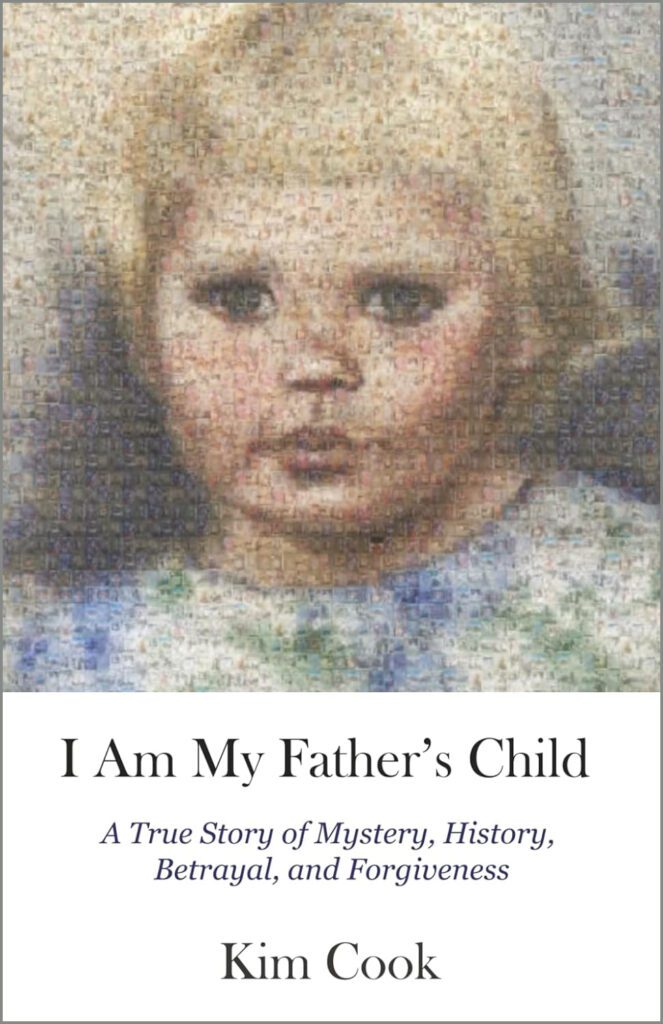
Audiobook Sample for Kim Cook’s ‘I Am My Father’s Child: A True Story of History, Mystery, Betrayal, and Forgiveness’
This audiobook sample is intended for promotional purposes only. You can purchase the audiobook on Audible and Amazon. Narration provided by Kelly L’Heureux. Introduction and outro narration provided by Wondervox.
I Am My Father’s Child: A True Story of History, Mystery, Betrayal, and Forgiveness
In every life, there are moments that shimmer just beneath the surface of memory—encounters, decisions, and turning points that, at the time, felt ordinary but would come to shape the very fabric of who we are. This book is a journey into such moments: the recollections of a daughter navigating the joys and sorrows of family, the unpredictability of change, and the search for belonging across places and decades.
Woven through these pages are the voices of those I have loved and learned from, especially my father, whose gentle wisdom guided me through the tumult and beauty of growing up. As I open these doors to my past, I invite you to step inside, to witness the laughter and grief, the certainty and doubt, and perhaps find echoes of your own story along the way.
-
AI and the End of Talent
AI and the End of Talent
By Mark McNease / EditorHaving been given something I know was written by AI and asked what I thought of it, as if the person had written it themself, and responding with “That’s very well written,” I realized that the end of talent – the years of development, the craft, the skill, that unique something that makes a writer a truly good writer – may be upon us. I know a lot of what I read now online is not written by humans, but it’s only recently that I viewed it from the perspective of someone who has been writing for 55 years and who has always enjoyed the thrill of discovering someone who was truly gifted), and realizing that AI is getting so good that it can make talent obsolete.
I’m not a hater. I use Claude, and find it very helpful when I’m stuck on plot, or I need to figure out a transition. But there is a not-so-fine line that, when crossed, makes decades of learning and growing and honing and crafting almost pointless. And that, I think, is the true imposter syndrome: not to believe that we are writers when we’re not, but to believe we are good ones when all we have written are prompts. I started writing at the age of 10 because it was and remains a magical experience, a zone of imagination that requires skill and time and effort and finesse and revision and listening and more revision and the silence of the blank page. To find ourselves approaching a point where “anyone can do that” with ChatGPT or Claude makes it all nearly pointless. I still want to thrill to the discovery of a wordsmith and a talented writer, without wondering if they actually wrote it. Will I stop using AI as a tool? No. Will I let it make me irrelevant? I hope not.
-
The Twist Podcast Gets a New Video Promo